Shopping cart
Search alphabetically (by title):
  1. ALL
  2. #
  3. 0
  4. 1
  5. 2
  6. 3
  7. 4
  8. 5
  9. 6
  10. 7
  11. 8
  12. 9
  13. A
  14. B
  15. C
  16. D
  17. E
  18. F
  19. G
  20. H
  21. I
  22. J
  23. K
  24. L
  25. M
  26. N
  27. O
  28. P
  29. Q
  30. R
  31. S
  32. T
  33. U
  34. V
  35. W
  36. X
  37. Y
  38. Z

Titles

The Remarkable Case of Dorothy L. Sayers

| Filed under: Literature & Literary Criticism
Kenney Book Cover

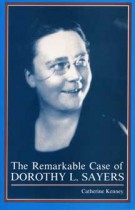
Sayer’s three main accomplishments serve as the organizing principle of this book: first, her transformation of the modern detective story into a serious novel of social criticism and moral depth; second, her penetrating critique of the situation of modern women; and finally her compelling work as a lay theologian and interpreter of Christianity. Thus, the book proceeds not only in roughly chronological order, but also from the work that most readers know best what they know least. The author assumes some familiarity with Sayer’s fiction, but The Remarkable Case of Dorothy L. Sayers is not intended for specialists alone. Indeed, it is appropriate for the same reader that DLS had in mind when she wrote. It will appeal to those who already admire her work, and it may bring others to appreciate her as a literary figure of importance.
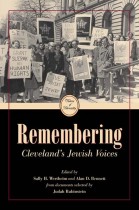


Remembering

and | Filed under: Regional Interest, Voices of Diversity

Since the early nineteenth century, Cleveland and the surrounding region have benefited from the emigration of European Jewry. A unique anthology of essays, short stories, and poems, A Cleveland Jewish Reader gathers for the first time rare and previously inaccessible writings about the Jewish experience in Northeast Ohio. Dating from the late 1800s to the 1980s, this collection is organized along five major themes—arts and culture, civic life, work and business, continuity, and philanthropy and service. The editors present a variety of voices that discuss the Jewish cultural gardens, Yiddish theater, socialism in the working class and women’s role in the Garment Strike, the cigar industry and Jewish farming, the Alsbacher Document, philanthropic efforts by the Jewish Community Federation of Cleveland, and many other topics.


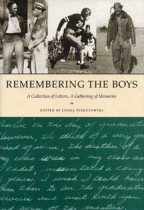
Remembering the Boys

| Filed under: Military History
Boys Book Cover

Remembering the Boys brings to life the correspondence of Western Reserve Academy alumni serving in World War II. In these eloquent letters, most of them written to the Academy’s headmaster, Joel Hayden, the story of the loneliness of war is told by the men serving on the front lines as well as by those waiting anxiously at home in Hudson, Ohio.


Renaissance Fantasies

| Filed under: Literature & Literary Criticism
Prendergast Book Cover

Renaissance Fantasies is the first full-length study to explore why a number of early modern writers put their masculine literary authority at risk by writing from the perspective of femininity and effeminacy. Prendergast argues that fictions like Boccaccio’s Decameron, Etienne Pasquier’s Monophile, Philip Sidney’s Astrophil and Stella, and Shakespeare’s As You Like It promote an alternative to the dominate, patriarchal aesthetics by celebrating unruly female and effeminate male bodies.


Repealing National Prohibition

| Filed under: History
Kyvig Book Cover

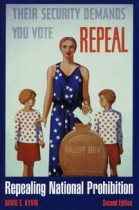
Employing previously unexamined archival evidence, Kyvig calls attention to a little-known but broad-based bipartisan movement led by the Associated Against the Prohibition Amendment and the Women’s Organization for National Prohibition Reform. These organizations ad their allies amassed political power, particularly within the Democratic path. In the midst of the Great Depression they engineered a complicated, yet very democratic process of formal constitutional change, in the end achieving the only amendment reversal in U.S. constitutional history.


Requiem for Revolution

| Filed under: Diplomatic Studies
Leacock Book Cover

“Let us once again transform the American continent into a vast crucible of revolutionary ideas and efforts…” urged President John F. Kennedy on March 13, 1961. “Let us once again awaken our American revolution until it guides the struggle of people everywhere—not with an imperialism of force or fear, but the rule of courage and freedom and hope for the future of man.” Similar calls stirred Latin America. In Brazil, it came from left-wing politicians, intellectuals, labor leaders, and students. The revolution on April Fool’s Day, 1964 was not exactly the one the Brazilian Left had sought. Nor was the uncontested military coup the victory of courage and freedom and hope that Kennedy had called for.


Resplendent Faith

| Filed under: Art, Sacred Landmarks
Faith Book Cover

Resplendent Faith is a richly illustrated compendium of the typical objects found within medieval church treasuries and includes a discussion of their form and function and their significance in the medieval religious service. Fliegel places this survey of the medieval liturgical treasury within its broad historical framework and considers the art representative of the most significant sacral objects produced during the Middle Ages. Supported by exquisite illustrations as well as a glossary and bibliography, Resplendent Faith will appeal to art historians, those interested in the history of religion and liturgical practices, and nonspecialists who appreciate medieval art or religious icons and reliquaries.


Resurrection of the Wild

| Filed under: Award Winners, Nature
Resurrection of the Wild by Deborah Fleming. Kent State University Press.

Resurrection of the Wild: Meditations on Ohio’s Natural Landscape wins the 2020 PEN/Diamonstein-Spielvogel Award for the Art of the Essay by this year’s judges—Jelani Cobb, Daniel Menaker, and Judith Thurman!


Retired, Rehabbed, Reborn

, and | Filed under: Architecture & Urban Renewal, Sacred Landmarks
Simons cover

Each year in the United States, hundreds of religious buildings and schools become vacant or underutilized as congregations and populations merge, move, or diminish. These structures are often well located, attractive, eligible for tax credits, and available for redevelopment. In this practical and innovative handbook, authors Simons, DeWine, and Ledebur have compiled a step-by-step guide to finding sustainable new uses for vacant structures. The reuse of these important buildings offers those charged with revitalizing them an opportunity to capture their embodied energy, preserve local beloved landmarks, and boost sustainability. Rehabbing presents an opportunity for developers to recoup some value from these assets. Neighbors and other stakeholders also enjoy benefits as the historic structures are retained and the urban fabric of communities is preserved.


Return to The House of God

and | Filed under: Literature & Medicine, Medicine
Kohn Book Cover

Samuel Shem’s The House of God is widely regarded as one of the most influential novels about medical education in the twentieth century. Decades after being published, this satire still raises issues of how interns and residents are trained and how patients experience their treatment. Return to The House of God is a scholarly and creative response to the best-selling novel, exploring its impact on medical education, residency training, and the field of literature and medicine.


Subject/Title category archive